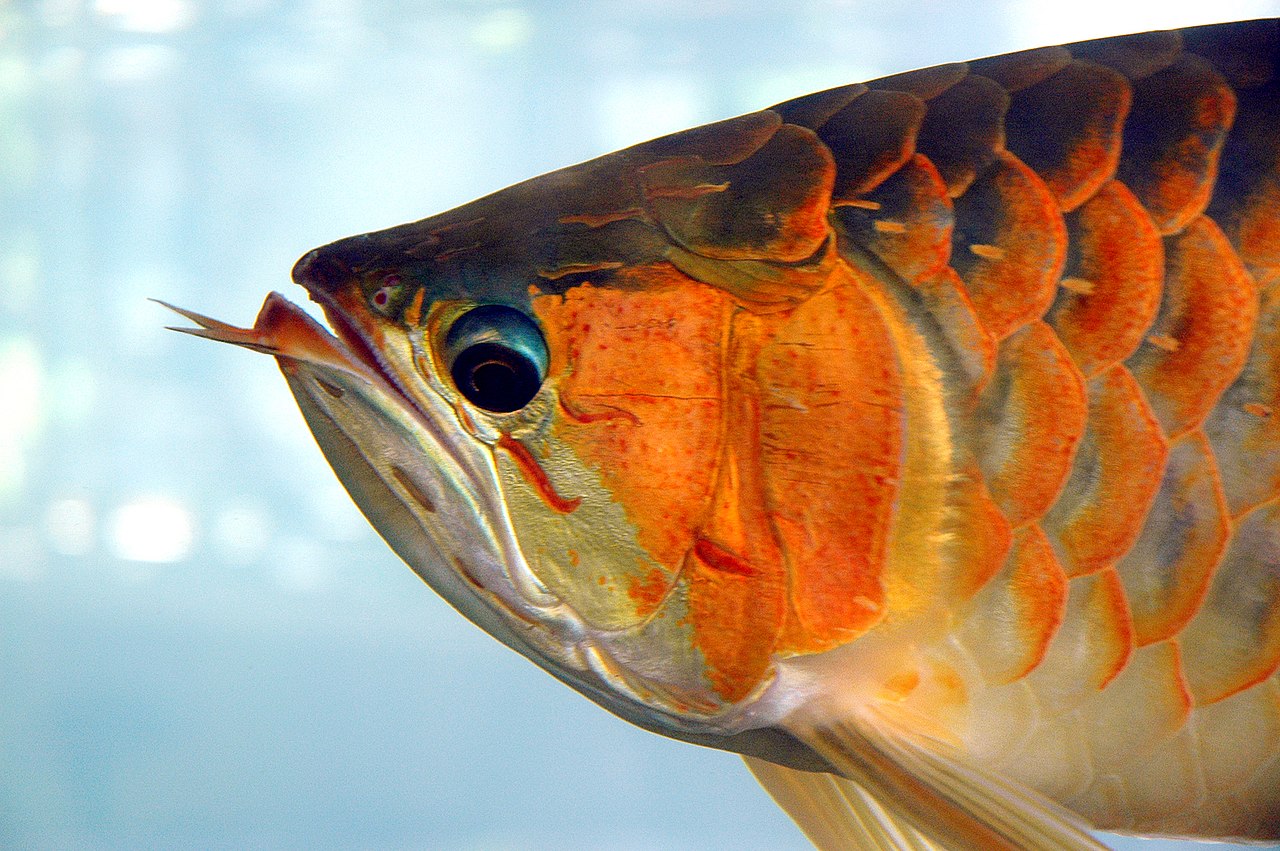
Super Red Arowana
Scleropages formosus
Min Tank Size
1500L
Adult Size
90 cm
Lifespan
20 years
About
Few freshwater fish carry the same cultural weight as the Super Red Arowana. Native to the blackwater rivers of Kalimantan in Indonesian Borneo, this variety of Scleropages formosus is distinguished by its deep blood-red coloration that develops gradually from the belly upward, often not reaching full intensity until the fish is several years old. Young specimens can look deceptively modest, which surprises new keepers expecting immediate brilliance. The scales catch light with a metallic sheen that genuinely has to be seen in person to appreciate properly.
Water conditions matter enormously here. 0 with low hardness and warm temperatures around 26 to 28 degrees Celsius is ideal. They're messy eaters and heavy waste producers, so robust filtration is essential.
Feeding is a highlight of keeping them. Live insects, fresh prawns, quality pellets formulated for arowana, and occasional fish all work well. Variety keeps them engaged and helps maintain color. Don't overfeed though, because fatty liver disease from excessive feeding is a real and common problem.
The tank needs to be large, genuinely large. A minimum of 1500 liters gets them through adolescence, but truly mature specimens need more like 2000 liters with a footprint that accommodates their full body length and turning radius.
They're not compatible with casual fishkeeping. The combination of legal requirements, space demands, filtration needs, and sheer cost of the animal makes this a species for committed enthusiasts. Explore actual keeper setups to understand what a proper Super Red build really looks like in practice.
Water Parameters
Temperature
°CpH
GH
dGHKH
dKHSwimming Level
Flow Preference
Keeping multiple Super Red Arowana together
Super Red Arowana is strongly territorial. Multiples fight over space unless the tank is large enough for each to claim its own area. A single individual is the safer default.
Compatibility
Tankmate selection is one of the trickiest parts of keeping a Super Red. Anything shrimp-sized or smaller is simply food. Suitable companions need to be large enough not to be eaten but not so aggressive that they'll stress or attack the arowana. Large, peaceful bottom dwellers work best because they occupy different space entirely. Giant gourami, large plecostomus, Oscar cichlids in very large setups, and Bichir species are commonly kept with arowana successfully. Avoid nippy species like large tiger barbs, and never house them with other arowana unless you have a tank north of 3000 liters and a group of at least six.
Commonly kept with
Species this one is most often paired withCommonly tried but avoid
Often paired, but shouldn't beCare Notes
The biggest mistake new owners make is underestimating long-term tank size requirements. A juvenile looks manageable in 600 liters but that fish will double in length. Water quality is critical for color, and even brief lapses can cause permanent fading. Filtration should turn the tank volume over at least four to five times per hour. A tight-fitting, weighted lid is non-negotiable since arowana are explosive jumpers that will clear an uncovered tank without warning. Legal compliance with CITES documentation must be maintained throughout ownership and especially at point of sale.
Behavior & Aggression
Super Reds are territorial apex predators that will eat anything small enough to fit in their mouths without hesitation. Toward other arowana, aggression is severe in pairs or trios where a dominant fish will relentlessly bully and kill subordinates. In groups of six or more the aggression tends to distribute and no single fish bears the full load, though this requires an enormous tank. They don't typically fin nip tankmates that are too large to eat, but they can be skittish and may injure themselves on tank walls when startled.
Things to Know
- CITES Appendix I listed, requires valid microchip certificate to buy or sell legally
- Can jump extremely well, a heavy secure lid is non-negotiable
- Keep singly or in large groups of 6+, pairs and trios fight relentlessly
- Color intensity fades permanently under poor water quality or stress
- Adult size can exceed 90cm, most home tanks eventually become undersized
Community Sightings
No builds featuring this species yet.
Be the first to feature Super Red Arowana in your build →Discover Tanks
Explore more builds from the community.


Explore More Species
More species to discover.


