Indian Glassfish
Parambassis ranga
Min Tank Size
75L
Adult Size
6 cm
Lifespan
4 years
School Size
6+
About
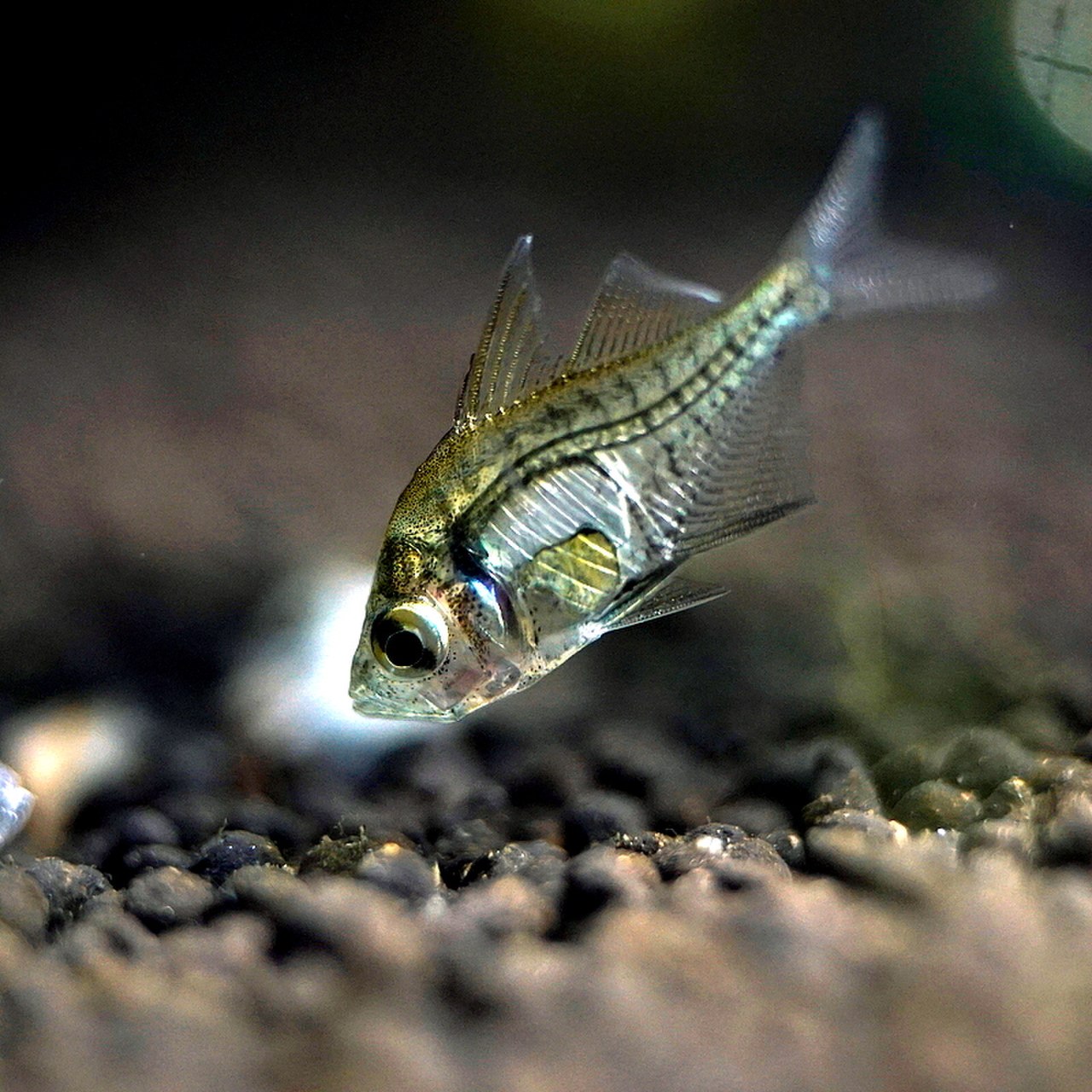
Native to South and Southeast Asia, ranging from India through Myanmar and into parts of Thailand, Parambassis ranga is one of those fish that genuinely stops people mid-step at the fish store. Their bodies are nearly completely transparent, showing the backbone, swim bladder, and internal organs through glass-clear tissue outlined in a faint silver-gold iridescence. It's a striking, almost alien look in a planted or dimly lit tank.
Unfortunately, they're frequently sold as so-called 'painted' or 'disco' fish, injected with colored dye to make them appear bright pink, blue, or yellow. Avoid these entirely. The injection process is stressful and often fatal within months. Undyed fish are genuinely beautiful on their own terms and live far longer.
In terms of water, they're adaptable across a decent pH range and can even handle low-end brackish conditions, though they thrive perfectly well in freshwater with moderate hardness. They're not as forgiving as common beginner species though, particularly around feeding. Most wild-caught or store-bought individuals are reluctant to accept dry or pelleted food and really need live or frozen options like bloodworm, daphnia, and brine shrimp to stay healthy long-term.
A 75-liter tank with gentle filtration, soft lighting, and some floating plant cover gives them a setup where they'll actually swim openly rather than hiding. They're a community-minded species in the best sense, peaceful toward similarly sized fish and genuinely fascinating to watch once they settle in.
Water Parameters
Temperature
°CpH
GH
dGHKH
dKHSwimming Level
Flow Preference
Keeping multiple Indian Glassfish together
Indian Glassfish are shoaling fish and need company of their own kind. Keep a group of at least 6. Smaller groups leave them stressed, washed-out in color, and prone to hiding.
Compatibility
Good tank mates are similarly peaceful community fish that share a preference for moderate hardness and slightly warmer temperatures. Danios, rasboras, peaceful barbs, and small gouramis all work well in practice. Avoid anything small enough to be eaten, especially dwarf shrimp, which glassfish will hunt. Also skip any confirmed fin nippers like tiger barbs, as glassfish can be a bit skittish and don't do well with persistent harassment. They're actually a good match for other slightly unusual fish like archer fish relatives in brackish setups, or simply kept alongside mollies and swordtails in harder freshwater conditions. A 75-liter tank comfortably houses a group of six alongside a few compatible bottom dwellers.
Commonly kept with
Species this one is most often paired withCommonly tried but avoid
Often paired, but shouldn't beCare Notes
The biggest mistake beginners make is buying dyed specimens without knowing what they're getting, and then struggling to understand why the fish keeps dying. Beyond that, feeding is the main stumbling block. Many glassfish simply refuse flake or pellet food, especially when first acquired. Starting with live daphnia or frozen bloodworm almost always gets them eating, and some individuals can be gradually transitioned to high-quality frozen mixes. Water quality needs to stay stable since they're not especially forgiving of ammonia spikes or dramatic parameter swings.
Behavior & Aggression
Indian Glassfish are peaceful fish with minimal aggression toward other species. Males can display mild territorial behavior toward one another, particularly in smaller tanks where space to establish distance is limited. This usually manifests as posturing and short chases rather than actual fin damage. Keeping a group of six or more spreads out any tension and prevents one individual from being persistently targeted. They won't bother tank mates, won't nip fins, and generally keep to themselves unless spawning behavior is occurring.
Things to Know
- Avoid dyed (injected color) specimens, they have shortened lifespans.
- Will eat small shrimp and tiny invertebrates.
- Feeding live or frozen foods is often necessary, many refuse dry food.
- Keep in groups of 6+, lone individuals become stressed and reclusive.
Community Sightings
No builds featuring this species yet.
Be the first to feature Indian Glassfish in your build →Discover Tanks
Explore more builds from the community.


Explore More Species
More species to discover.


