Oscar
Astronotus ocellatus
Min Tank Size
285L
Adult Size
35.6 cm
Lifespan
15 years
About
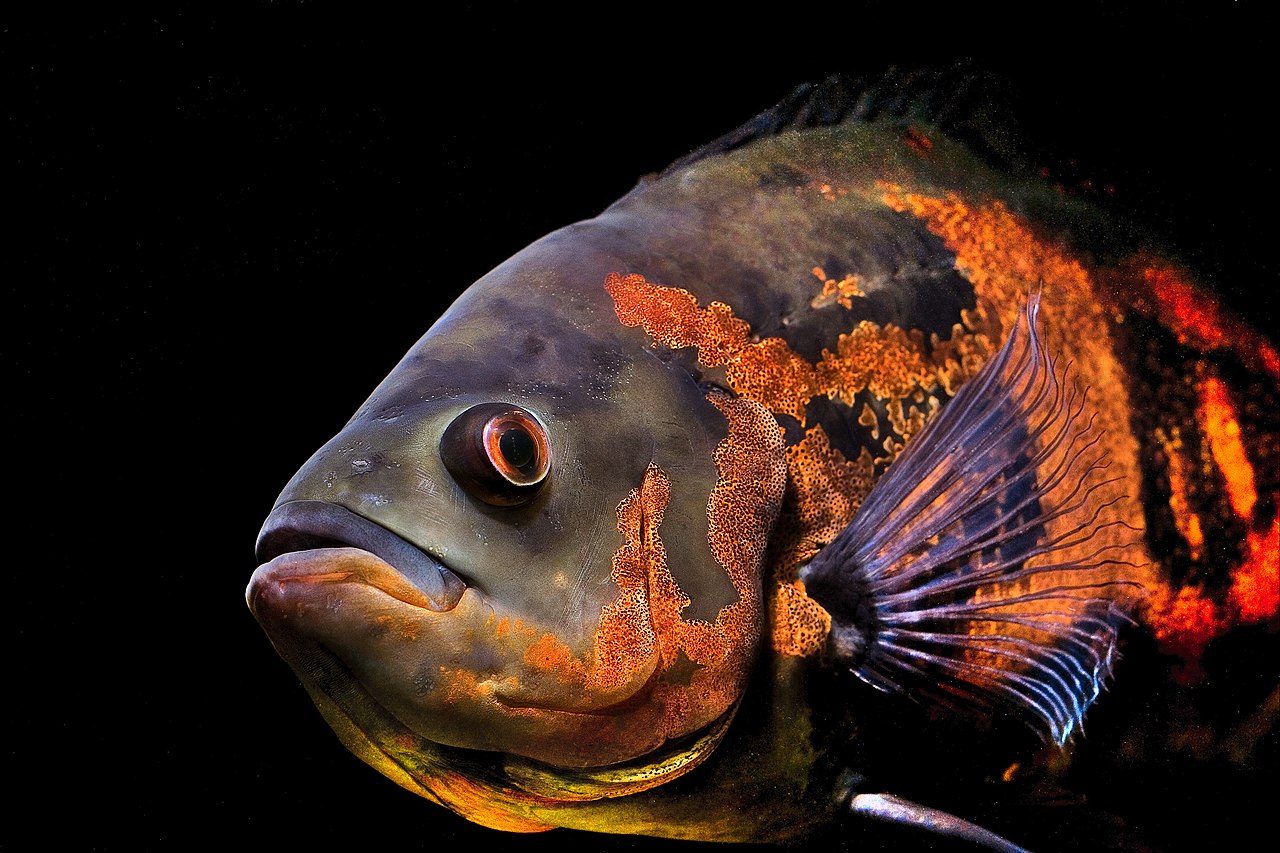
Native to the slow-moving rivers and floodplains of South America, particularly the Amazon and Orinoco basins, Oscars are one of the most recognizable cichlids in the hobby. They grow large and fast, reaching full size within a couple of years, and their round, laterally compressed bodies come in a wide range of color morphs. Wild-type fish are mottled brown and olive with an orange-ringed eyespot near the tail base, while captive variants like Tiger, Red, Albino, and Lemon have been selectively developed over decades.
What sets Oscars apart from most fish is their personality. They recognize their owners, anticipate feeding time, and respond to interaction in ways that feel almost mammalian. Plenty of keepers describe them as their most rewarding fish, precisely because of this engagement.
They prefer water around 24 to 27 degrees Celsius, a pH anywhere from 6.0 to 8.0 (they adapt well), and moderate flow to mimic their native habitat. Diet-wise, they're carnivores. High-quality cichlid pellets should form the base of their feeding, supplemented with earthworms, prawns, and occasional whole foods. Skip the goldfish feeder route entirely since it introduces parasites and offers poor nutrition.
A single adult Oscar produces waste comparable to a medium-sized pond fish, so over-filtration isn't a luxury here, it's the baseline. Weekly water changes of 25 to 30 percent are typically necessary to keep nitrates in check.
For a species this engaging and demanding, it's worth looking at how experienced hobbyists set up their tanks before committing.
Water Parameters
Temperature
°CpH
GH
dGHKH
dKHSwimming Level
Flow Preference
Keeping multiple Oscar together
Oscar is strongly territorial. Multiples fight over space unless the tank is large enough for each to claim its own area. A single individual is the safer default.
Compatibility
Oscars are best kept alone or with similarly sized, robust tankmates. Large South American cichlids like Severums, Chocolate Cichlids, or Banded Leporinus can sometimes coexist in larger setups of 400 liters or more, though there's always risk. Common Plecos are one of the more reliable companions since they occupy the bottom and are armored enough to hold their own. Anything small enough to fit in an Oscar's mouth will be eaten eventually. Avoid anything with long delicate fins, anything slow-moving, and definitely anything shrimp or snail-sized.
Commonly kept with
Species this one is most often paired withCommonly tried but avoid
Often paired, but shouldn't beCare Notes
The biggest beginner mistake with Oscars is buying one at 5 cm in a 100-liter tank with plans to upgrade later. That upgrade needs to happen fast because they grow several centimeters a month when young. Filtration is almost always underestimated. A canister filter rated for twice the tank volume is a reasonable starting point, and many keepers run two. Oscars also redecorate constantly, uprooting plants and moving substrate. Stick with heavy hardscape, large smooth stones, and driftwood rather than live plants if you want the tank to stay intact.
Behavior & Aggression
Oscars are territorial and will claim a significant portion of any tank as their own. Aggression spikes during breeding, when protecting a chosen cave or flat surface, and when food competition is present. They don't nip so much as outright attack, and smaller fish simply won't survive. Juveniles are often kept together without incident, but as they mature, things can deteriorate quickly, especially between two males. Rearranging decor can sometimes reset territorial disputes temporarily, though it's rarely a permanent fix.
Things to Know
- Grows to 35+ cm, plan tank size around adult dimensions not juvenile
- Produces enormous waste, heavy filtration is non-negotiable
- Will destroy most live plants and rearrange decor constantly
- Pairs can bond for breeding but males may attack females if conditions are wrong
- Feeder fish carry disease and parasites, avoid as staple food
Community Sightings
No builds featuring this species yet.
Be the first to feature Oscar in your build →Discover Tanks
Explore more builds from the community.


Explore More Species
More species to discover.


