Horseface Loach
Acantopsis dialuzona
Min Tank Size
150L
Adult Size
22 cm
Lifespan
8 years
School Size
3+
About
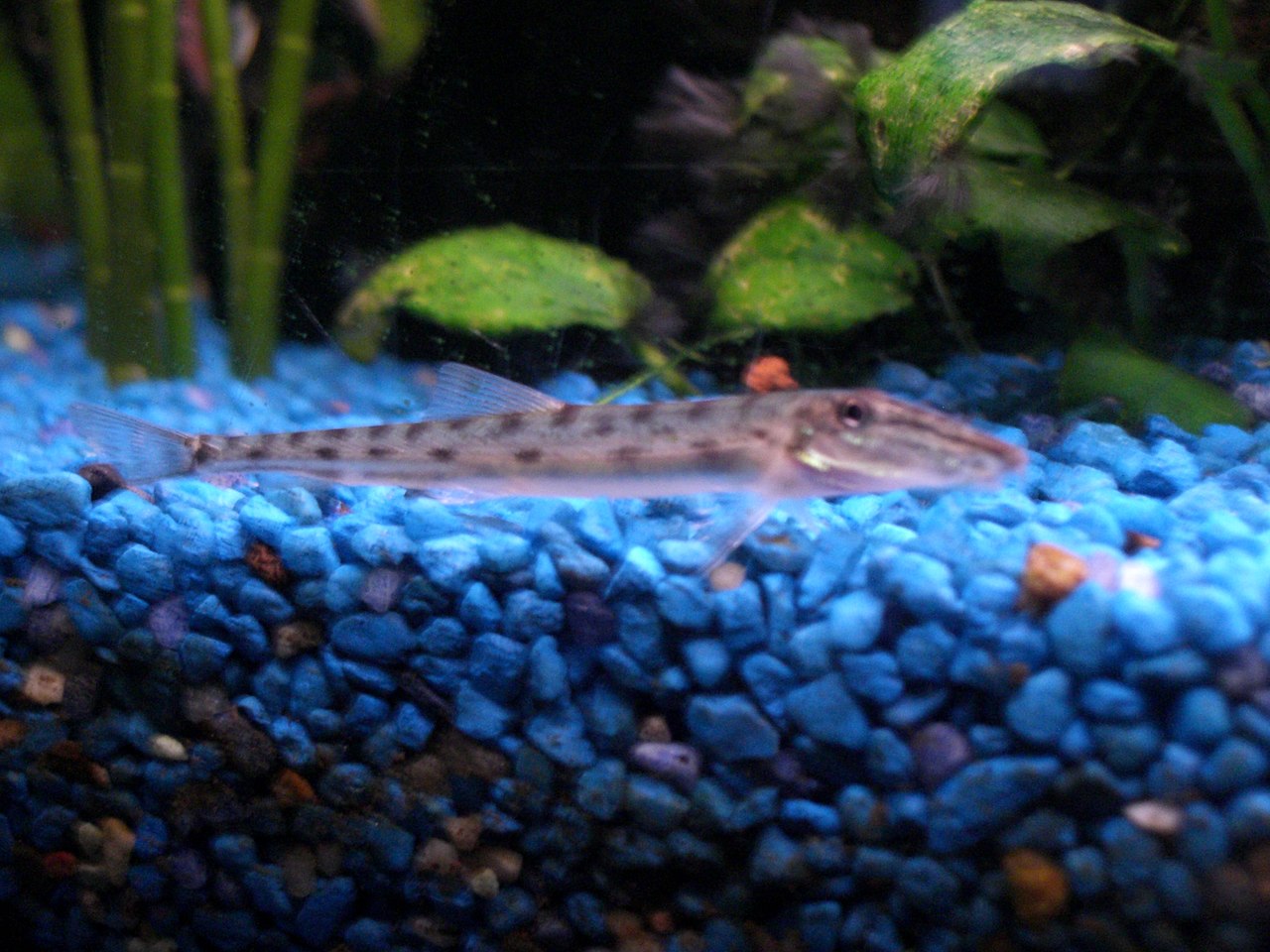
Native to river systems across Southeast Asia including Thailand, Malaysia, and Borneo, the horseface loach gets its name from that dramatically elongated snout, which really does give it an almost comical equine profile. Adults can push past 20cm, making them considerably larger than most buyers expect when they pick up a juvenile at the fish store. They're built for burrowing, with a slender torpedo-shaped body and subtly patterned brown and tan markings that do an excellent job of blending into sandy riverbeds.
In the wild they inhabit fast-flowing, well-oxygenated rivers with sandy or fine gravel substrates, and that's exactly what you need to replicate at home. Fine sand is non-negotiable, both for their burrowing behavior and to protect the delicate sensory barbels around the mouth. Water should lean soft to moderately hard, slightly acidic to neutral, and you'll want decent circulation to keep oxygen levels up.
Diet-wise they're carnivores at heart, doing best on sinking foods like bloodworm, daphnia, brine shrimp, and quality sinking pellets. They'll also sift constantly through the sand hunting for tiny invertebrates and organic bits.
Don't expect much of a show, these fish spend a lot of their time buried with only their eyes poking above the surface. When they do emerge to cruise the bottom it's genuinely entertaining to watch. If you want to see what a real horseface loach setup looks like in practice, exploring community builds featuring this species is a great way to get a feel for how they actually use their space.
Water Parameters
Temperature
°CpH
GH
dGHKH
dKHSwimming Level
Flow Preference
Keeping multiple Horseface Loach together
Horseface Loach are shoaling fish and need company of their own kind. Keep a group of at least 3. Smaller groups leave them stressed, washed-out in color, and prone to hiding.
Compatibility
These loaches pair well with most peaceful mid and upper water column fish that won't outcompete them for food. Southeast Asian community setups work nicely, think rasboras, danios, gouramis, and smaller barbs. Avoid boisterous fin-nipping species like tiger barbs since the loach's calm nature makes it an easy target for harassment, though its fins are short enough that it's not a classic victim. Other bottom dwellers can be problematic if the tank is small, since territory over substrate becomes an issue. Corydoras can coexist but they'll compete for the same sinking food so target feeding may be necessary. Very small nano shrimp like neocaridina juveniles may be consumed accidentally while sifting, so dwarf shrimp tanks aren't ideal.
Commonly kept with
Species this one is most often paired withCommonly tried but avoid
Often paired, but shouldn't beCare Notes
The most common mistake is using the wrong substrate. Anything coarser than fine-grain sand will damage the barbels and snout over time, leading to bacterial infections that are difficult to treat. New keepers also panic when the fish disappears for days on end, buried completely under the sand. This is totally normal behavior, not a sign of illness. Water quality needs to be stable and well-oxygenated since these fish come from flowing rivers. They can be shy eaters initially, so sinking foods placed directly in their known resting zones after lights-out improves feeding success significantly.
Behavior & Aggression
Horseface loaches are not aggressive toward other species in any meaningful way. Where mild conflict does occur, it's almost always between individuals of the same species competing over a prime buried spot or a particular patch of substrate. This rarely escalates beyond a brief chase or a nudge. They don't nip fins, bother small fish, or actively hunt anything large enough to be considered a tankmate. Keeping multiples is generally fine as long as the tank footprint is large enough to give each fish room to spread out and claim its own patch of sand.
Things to Know
- Must have fine sand substrate, coarse gravel will injure the snout and barbels.
- Will vanish completely under sand for hours or days, don't assume it has died.
- Can reach 22cm, often sold small and underestimated at purchase.
- May consume very small shrimp and shrimp fry while sifting sand.
Community Sightings
No builds featuring this species yet.
Be the first to feature Horseface Loach in your build →Discover Tanks
Explore more builds from the community.


Explore More Species
More species to discover.


