X-Ray Tetra
Pristella maxillaris

Min Tank Size
60L
Adult Size
4.5 cm
Lifespan
5 years
School Size
6+
About
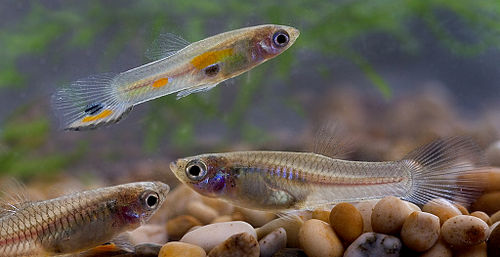
Native to coastal rivers and streams of Venezuela and parts of northern South America, the X-Ray Tetra is one of those fish that earns its common name immediately. Hold a flashlight up to the tank at night and you can literally see the vertebral column running through that translucent body. It's a striking effect, and combined with the boldly banded dorsal and anal fins in yellow, black, and white, these fish punch well above their size in visual interest. 5 cm, making them a genuinely small tetra well suited to modestly sized community tanks.
Water conditions are refreshingly flexible. 5 and can even handle a small amount of salt, though there's no practical reason to add salt to a standard community setup. Soft to moderately hard water suits them fine. Temperature should stay in the mid-to-upper 20s Celsius.
Feeding is simple. They'll take quality flake or micro-pellet food eagerly, and supplementing with small live or frozen foods like daphnia, micro worms, or baby brine shrimp keeps them in excellent color and condition.
In terms of personality, these fish are active schoolers that spend most of their time in the middle column, darting about in a loose group. They're genuinely peaceful and cause no problems for plants, snails, or most invertebrates. Kept in a group of six or more, they school tightly and behave naturally.
Browse real tank builds featuring X-Ray Tetras to see how well they complement darker substrates and heavily planted layouts.
Water Parameters
Temperature
°CpH
GH
dGHKH
dKHSwimming Level
Flow Preference
Keeping multiple X-Ray Tetra together
X-Ray Tetra are shoaling fish and need company of their own kind. Keep a group of at least 6. Smaller groups leave them stressed, washed-out in color, and prone to hiding.
Compatibility
X-Ray Tetras fit naturally into a wide range of peaceful community setups. They work beautifully alongside other small tetras, rasboras, livebearers like platies and mollies, and peaceful bottom dwellers like corydoras or small loaches. Dwarf cichlids such as apistogrammas can work in a larger tank as long as the cichlids have their own territory. Avoid pairing them with larger semi-aggressive fish like tiger barbs or nippy barb species, and definitely avoid anything predatory enough to view them as a snack. Bettas are often fine with them in a well-planted tank, though individual betta temperament varies. They're a genuinely safe choice for most peaceful community builds.
Commonly kept with
Species this one is most often paired withCommonly tried but avoid
Often paired, but shouldn't beCare Notes
Beginners rarely have serious trouble with these, but the most common mistake is keeping too few. A group of three or four will be stressed, hide constantly, and never show their natural schooling behavior. Six is the real minimum, and eight or more is noticeably better. Water quality matters more than specific parameters since they're adaptable, but they don't tolerate ammonia or nitrite spikes well. Regular water changes keep them healthy and their fins looking sharp. Don't make the mistake of adding salt thinking they need brackish conditions. They're perfectly happy in a standard freshwater setup.
Behavior & Aggression
X-Ray Tetras are reliably peaceful with virtually everything they share a tank with. No meaningful fin-nipping tendencies have been documented in healthy, properly schooled groups. Conspecific aggression is essentially nonexistent. The only mild caveat is that, like most small tetras, a hungry or undersized group might occasionally pester very small shrimp fry, but this is opportunistic feeding rather than aggression. Keeping a group of at least six dramatically reduces any restless or stressed behavior that could otherwise push individuals toward nipping.
Things to Know
- Can eat small shrimp fry, safe with adult dwarf shrimp
- Tolerates slightly brackish water but this is rarely needed or recommended
- Can be shy and stressed if school size is too small.
Community Sightings
No builds featuring this species yet.
Be the first to feature X-Ray Tetra in your build →Discover Tanks
Explore more builds from the community.


Explore More Species
More species to discover.