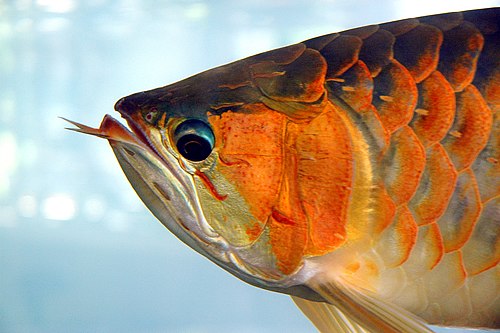
Neon Dwarf Rainbowfish
Melanotaenia praecox

Min Tank Size
75L
Adult Size
6 cm
Lifespan
5 years
School Size
6+
About
Native to the Mamberamo River basin in New Guinea, Melanotaenia praecox is one of those fish that genuinely stops people mid-scroll. Males carry an iridescent blue body that shifts between teal and electric cobalt depending on the light, with fins that glow a vivid red to orange-red. Females are more subdued but still attractive, showing a yellowish-green tint to their fins. At around 6 cm fully grown, they're among the smallest rainbowfish available in the hobby, which makes them genuinely suitable for tanks starting around 75 liters rather than the massive setups their larger cousins need.
Water parameters don't need to be extreme. A neutral to slightly acidic pH between 6.0 and 7.5 suits them well, and they prefer moderate hardness rather than very soft water. Temperature anywhere in the 22 to 28 degree range works, though staying closer to the middle keeps stress low. They're active swimmers and appreciate some open water to dart through, ideally balanced with planted margins for retreat.
Feeding is easy. They'll eat quality flake or micro pellets as a staple and absolutely relish small live or frozen foods like daphnia, baby brine shrimp, and bloodworm. Regular variety keeps their color sharp and their behavior lively.
The famous morning display behavior is worth mentioning because it's something first-time owners often get excited about. Males spread their fins and chase each other through the upper water column shortly after lights come on, colors blazing. It looks aggressive but it's almost entirely performative. A well-kept group in a planted tank is a genuinely dynamic centerpiece.
Water Parameters
Temperature
°CpH
GH
dGHKH
dKHSwimming Level
Flow Preference
Keeping multiple Neon Dwarf Rainbowfish together
Neon Dwarf Rainbowfish are shoaling fish and need company of their own kind. Keep a group of at least 6. Smaller groups leave them stressed, washed-out in color, and prone to hiding.
Compatibility
These rainbowfish pair well with a wide range of community fish that share their temperature and pH preferences. Tetras like rummy-nose or ember tetras, smaller rasboras, corydoras, and dwarf cichlids like apistogramma all work well in appropriately sized tanks. Avoid housing them with fin nippers like tiger barbs, as rainbowfish with their larger finnage can become targets. Small shrimp are risky, especially neocaridina shrimplets which may be eaten. Adult cherry shrimp are usually left alone but it's not guaranteed. They're too small and too fast to bother snails.
Commonly kept with
Species this one is most often paired withCommonly tried but avoid
Often paired, but shouldn't beCare Notes
The most common mistake is keeping too few. A group of three or four looks skittish and washed out compared to a proper school of six or more where the fish gain confidence and color up fully. They need clean water and don't tolerate neglect well despite the beginner label. Sponge filters or gentle hang-on-back filters work better than strong currents, which stress them. Their color can fade significantly under poor conditions or bad lighting, which often gets misattributed to disease when it's really a husbandry issue.
Behavior & Aggression
Praecox are peaceful fish, but males do establish a loose pecking order through display and chasing. This is mostly harmless and rarely results in physical damage. The behavior intensifies in small groups where one male can fixate on another. Keeping four or more males together distributes the competitive energy and prevents any single fish from being worn down. Aggression toward other species is essentially nonexistent. They won't bother slow-moving tankmates and aren't interested in fins.
Things to Know
- Males compete with display behavior, keep multiple males to spread dominance.
- Will eat small shrimp and shrimplets, even if adults are generally ignored.
- Prone to jumping, a tight-fitting lid is essential.
- Males can be boisterous, keep more females than males.
Community Sightings
No builds featuring this species yet.
Be the first to feature Neon Dwarf Rainbowfish in your build →Discover Tanks
Explore more builds from the community.


Explore More Species
More species to discover.