Lambchop Rasbora
Trigonostigma espei
Min Tank Size
40L
Adult Size
3.2 cm
Lifespan
4 years
School Size
8+
About
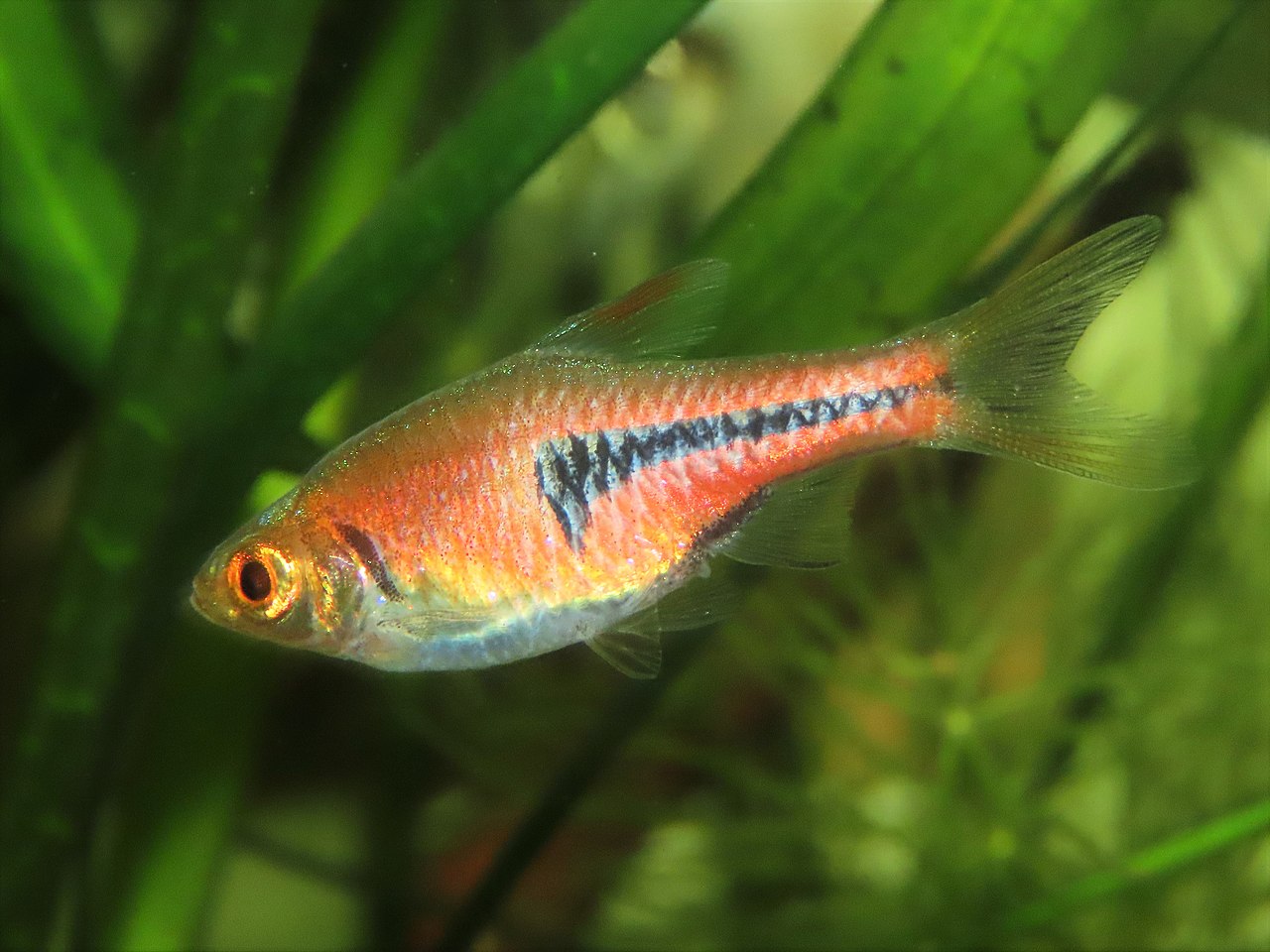
Native to Thailand, Cambodia, and parts of the Malay Peninsula, Trigonostigma espei is one of three closely related rasboras that often get lumped together in fish stores. It's slimmer than the harlequin rasbora and carries a narrower, more elongated black marking that genuinely does resemble a lambchop when you look closely. The body is a warm copper-orange that catches the light beautifully, especially under full-spectrum planted tank lighting. Females tend to be slightly rounder, and the belly can take on a faint rosy hue.
They come from slow-moving blackwater streams and forest pools where the water is heavily tinted with tannins, soft, and acidic. Replicating that environment isn't strictly necessary to keep them alive, but it absolutely brings out their best coloration and extends their lifespan. A pH between 5.5 and 6.8, very soft water, and some leaf litter or driftwood will make these fish look completely different from the washed-out specimens you see under fluorescent store lighting.
Diet is easy. They accept quality flake, micro pellets, and any small live or frozen food like daphnia, baby brine shrimp, or micro worms. Varying the diet keeps them in good condition and encourages natural foraging behavior throughout the water column.
Temperamentally, they're about as easygoing as fish come. No nipping, no territory disputes, no issues with plants or snails. What they do need is numbers. A group of eight or more schools noticeably tighter than a group of five, and the visual effect in a well-planted tank is genuinely stunning.
If you want to see how this species actually looks in a mature setup, browsing community tank journals built around Southeast Asian biotopes is worth your time.
Water Parameters
Temperature
°CpH
GH
dGHKH
dKHSwimming Level
Flow Preference
Keeping multiple Lambchop Rasbora together
Lambchop Rasbora are shoaling fish and need company of their own kind. Keep a group of at least 8. Smaller groups leave them stressed, washed-out in color, and prone to hiding.
Compatibility
These fish are compatible with almost anything small and peaceful. Classic pairings include pygmy corydoras, otocinclus, chocolate gouramis, sparkling gouramis, other small rasboras, and peaceful loaches like kuhlis. They work especially well in Southeast Asian biotope setups alongside species that share their soft, acidic water requirements. Avoid keeping them with anything large enough to eat them, or nippy species like tiger barbs. Dwarf cichlids like apistogrammas are generally fine provided the tank has enough space and hiding spots to give the cichlids territory without the rasboras being constantly harassed. Larger shrimp like cherry or amano shrimp coexist without issue.
Commonly kept with
Species this one is most often paired withCommonly tried but avoid
Often paired, but shouldn't beCare Notes
The most common mistake is keeping too few of them. Six looks okay at the store but you'll notice the fish seem scattered and skittish in the tank. Eight is the real minimum, and twelve or more is where their schooling behavior becomes genuinely impressive. The second mistake is hard water. Many beginners add them to standard tap water setups that work fine for guppies or mollies, but lambchops in high-GH water tend to look dull and rarely reach their full potential lifespan. If your tap is hard, consider RO blending or using a blackwater conditioner alongside natural tannin sources.
Behavior & Aggression
Lambchop rasboras are genuinely non-aggressive. There are no meaningful territorial disputes, no fin-nipping tendencies, and no pecking order drama that causes visible stress to tankmates. The only remotely aggressive behavior you might observe is very brief chasing within the school itself, which is normal social interaction rather than true aggression. This behavior usually disappears entirely once group size reaches eight or more fish. Crowding them in too small a tank or keeping too few can cause some restlessness, but even then it rarely translates into harm to other species.
Things to Know
- Needs schools of 8+ to display proper schooling behavior and reduce stress.
- May occasionally pick at very small shrimp fry, though adults are rarely targeted.
- Prefers soft, acidic water; hard tap water can shorten lifespan noticeably.
- Needs a tight fitting lid, known to jump.
- Can be shy without a large school and plant cover.
Community Sightings
No builds featuring this species yet.
Be the first to feature Lambchop Rasbora in your build →Discover Tanks
Explore more builds from the community.


Explore More Species
More species to discover.


