Figure Eight Puffer
Dichotomyctere ocellatus
Min Tank Size
75L
Adult Size
6.5 cm
Lifespan
10 years
About
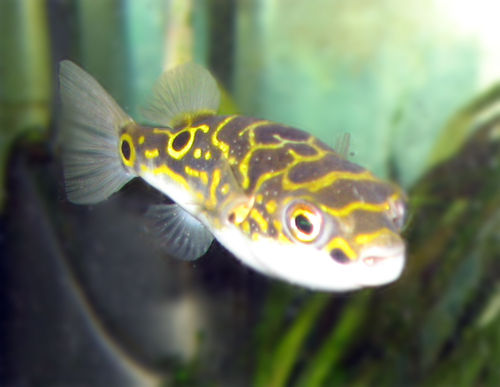
Native to coastal brackish waters and tidal zones across Southeast Asia, the Figure Eight Puffer is one of the most visually distinctive small fish you can keep. Its back is patterned with bold yellow-green swirls and spots on a dark background that loosely resemble figure eights, while the belly is cream to white. 5 cm as adults, which makes them feel manageable until you realize how much personality is packed into that small body.
These fish are sharp-eyed, curious, and opinionated. They'll watch you from across the room and swim to the glass when you approach. That's half the appeal.
Water parameters matter here. 008, with a pH on the alkaline side and good hardness. Pure freshwater won't kill them immediately, but it shortens their lifespan and causes health issues over time. Hardness is important for maintaining the right ion balance alongside the salt.
Diet is a big part of keeping them successfully. Their teeth, called a beak, grow continuously and need hard-shelled prey to wear down naturally. Snails are the go-to, and many keepers maintain a snail colony just to feed their puffer. Clams, mussels, and crayfish tails are great supplements. Without this, beak trimming by a vet becomes necessary.
They're not peaceful fish. They'll nip, bite, and harass tankmates, and keeping them with anything slow or delicate is asking for trouble. If you're curious what a well-planned Figure Eight tank looks like in practice, browsing community builds and journals for this species is genuinely worth the time.
Water Parameters
Temperature
°CpH
GH
dGHKH
dKHSwimming Level
Flow Preference
Keeping multiple Figure Eight Puffer together
Best kept alone — its aggression and brackish needs make safe tankmates nearly impossible to find in most setups.
Compatibility
Compatibility is genuinely difficult with this species. In a brackish setup, options are limited to other species that tolerate or prefer similar salinity. Mollies are a popular and reasonably successful choice since they're hardy, fast-moving, and brackish-tolerant. Some keepers have success with archer fish or certain gobies in larger tanks. Anything with long fins, slow movement, or small enough to be considered prey is a bad idea. Snails and shrimp are food, not tankmates. Keeping a Figure Eight solo in a species-only tank with a snail feeder culture in a separate container is the safest and most common approach, and many experienced keepers recommend this outright.
Commonly kept with
Species this one is most often paired withCommonly tried but avoid
Often paired, but shouldn't beCare Notes
The biggest mistake beginners make is keeping Figure Eights in straight freshwater. They survive short-term but decline slowly, and by the time problems are obvious, damage may already be done. The second most common issue is beak overgrowth from feeding only soft foods. Snails need to be a regular part of the diet, not an occasional treat. Getting salt levels right requires a hydrometer or refractometer, not guessing. Brackish isn't salty tap water. Water quality also matters more than people expect for a tough-looking fish. They're sensitive to ammonia and nitrite spikes like any other species.
Behavior & Aggression
Figure Eight Puffers are consistently nippy and don't telegraph their intentions the way some aggressive fish do. They'll casually cruise over to a tankmate and take a chunk out of a fin before you even realize what happened. Conspecific aggression is especially unpredictable. Two puffers that coexist for months can suddenly turn on each other. Territory is a real factor, larger tanks reduce conflict but don't eliminate it. Stress, feeding competition, and boredom all seem to amplify aggression. Enrichment like varied foods and tank decor helps, but don't bank on it solving a biting problem.
Things to Know
- Teeth overgrow without hard-shelled foods like snails and clams
- Requires slightly brackish water (SG 1.004 to 1.008) for long-term health
- Will bite fins off tankmates without warning, even large ones
- Keep singly or with extreme caution, conspecific aggression is common
- Never house with snails or shrimp intended as pets
Community Sightings
No builds featuring this species yet.
Be the first to feature Figure Eight Puffer in your build →Discover Tanks
Explore more builds from the community.


Explore More Species
More species to discover.


