Clown Loach
Chromobotia macracanthus
Min Tank Size
450L
Adult Size
30.5 cm
Lifespan
25 years
School Size
5+
About
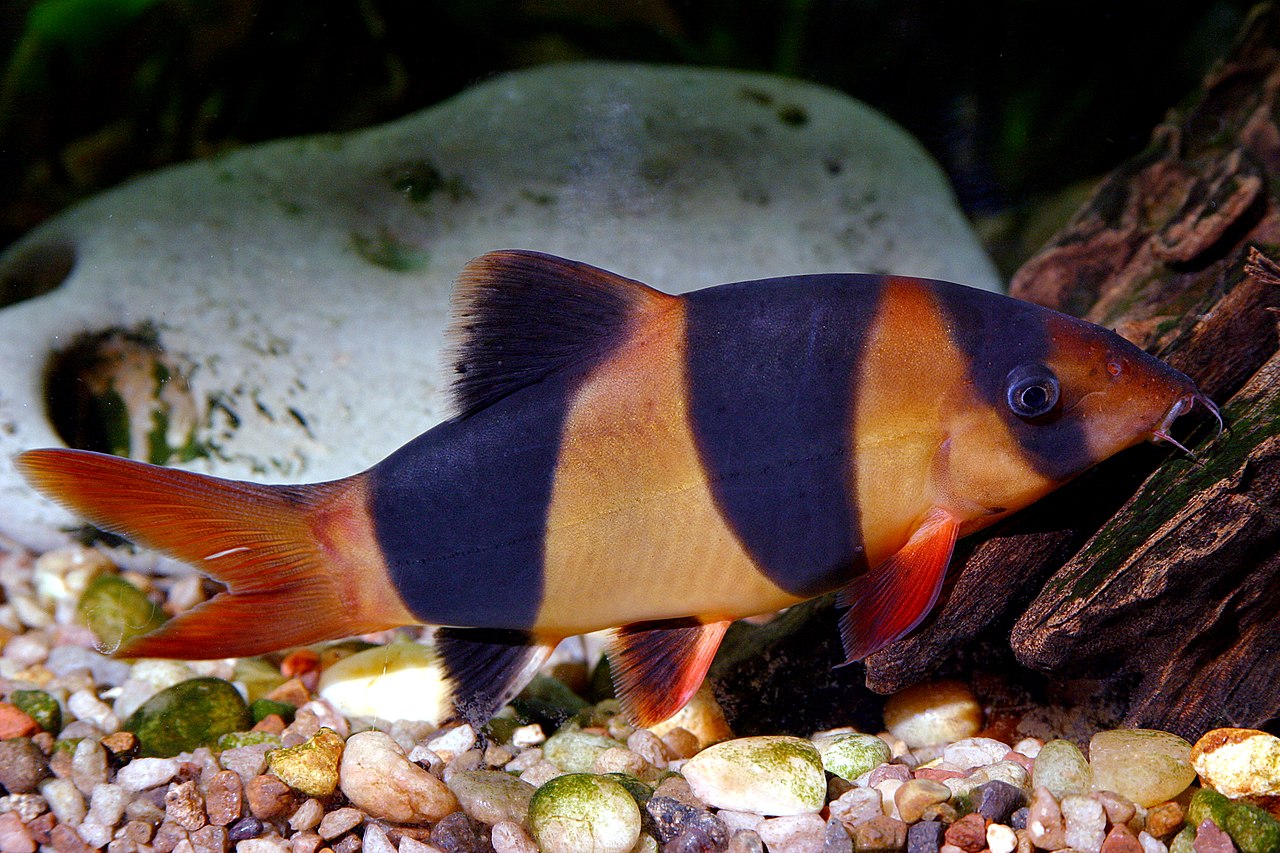
Native to the river systems of Borneo and Sumatra, clown loaches are one of the most recognizable freshwater fish in the hobby. That vivid orange body slashed with three thick black bands makes them impossible to miss, and their playful personality keeps them interesting for decades. Yes, decades. These fish routinely outlive cats and dogs when kept well.
They're sold at an inch or two in fish stores and look manageable, but don't be fooled. Adults push past 30 centimeters and need serious swimming room. A group of five adults is comfortable in 380 liters minimum, and bigger is always better once they start to fill out. They prefer warmer water on the higher end of tropical ranges, soft to moderately hard water, and a slightly acidic to neutral pH. Driftwood, caves, and dim lighting make them much bolder and more active.
Feeding isn't complicated. They'll enthusiastically take sinking pellets, frozen bloodworms, blanched vegetables, and snails. Live snails are genuinely treated as a delicacy and disappear fast. Their diet should be varied to support their immune system, especially since they're notoriously prone to ich.
In terms of temperament, clown loaches are sociable and curious. They chase each other around constantly, pile into the same cave to sleep, and communicate with audible clicking sounds. Keeping fewer than five causes chronic stress and behavioral problems. These fish reward patience and proper planning with some of the most entertaining behavior you'll see in a freshwater tank.
Water Parameters
Temperature
°CpH
GH
dGHKH
dKHSwimming Level
Flow Preference
Keeping multiple Clown Loach together
Clown Loach are shoaling fish and need company of their own kind. Keep a group of at least 5. Smaller groups leave them stressed, washed-out in color, and prone to hiding.
Compatibility
Clown loaches work well with most peaceful to semi-aggressive community fish that can tolerate warm water. Angelfish, larger tetras like congos or bleeding hearts, rainbowfish, gouramis, and similarly sized barbs are all solid choices. Avoid keeping them with delicate slow-moving fish that might get startled by their activity level. Don't house them with dwarf shrimp or small ornamental snails since they'll be eaten. Other loach species like yoyo loaches can work but watch for competition over hides. The tank must be large enough for the eventual adult size of the whole group.
Commonly kept with
Species this one is most often paired withCommonly tried but avoid
Often paired, but shouldn't beCare Notes
The two biggest mistakes beginners make are buying too few and not planning for adult size. Juveniles look fine in a community tank but the fish that survives twenty years in a 100-liter setup is not thriving. Clown loaches are also highly susceptible to ich, often being the first fish in a tank to show white spots. Treat quickly and note that they're sensitive to standard copper-based medications at full dose. Scaleless or thin-scaled fish often need reduced dosing. Good water quality and stability go a long way in preventing illness.
Behavior & Aggression
Clown loaches are not aggressive toward tankmates in any meaningful way. Most of their sparring is with each other, and it looks alarming but rarely causes injury. They'll lock mouths, chase, and posture, especially when establishing a pecking order in a new group or after tank rearrangements. This behavior typically settles within a few days. Larger groups actually reduce individual aggression by spreading social tension across more fish. Providing multiple caves and hiding spots helps as well.
Things to Know
- Will decimate snail populations, but assassin snails and nerites are generally too large or...
Community Sightings
No builds featuring this species yet.
Be the first to feature Clown Loach in your build →Discover Tanks
Explore more builds from the community.


Explore More Species
More species to discover.


