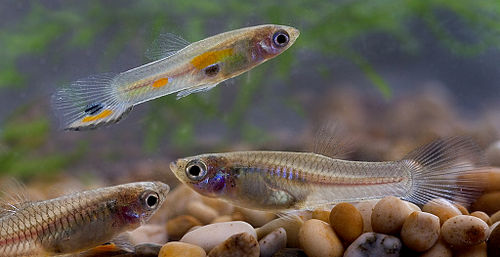
Boesemani Rainbowfish
Melanotaenia boesemani

Min Tank Size
150L
Adult Size
11 cm
Lifespan
6 years
School Size
6+
About
Native to a handful of small lakes in the Vogelkop Peninsula of West Papua, Indonesia, Boesemani Rainbowfish have one of the most distinctive color patterns in freshwater fishkeeping. The front half of the body is a vivid blue-violet, fading into a brilliant orange-red on the rear half. It sounds almost artificial, but on a mature male in good condition, it's genuinely striking.
Females and juveniles are considerably duller, mostly silver-green, so don't panic if your new fish look underwhelming at first. They need time, good water, and a varied diet to reach their full potential. Males will put on a flaring display in the morning, fanning their fins and chasing each other around in a show of dominance that's more spectacle than violence.
Water quality matters here. These fish come from lakes with harder, more alkaline water than many tropical species, so soft acidic water will stress them over time and suppress coloration. 0, moderate to high hardness, and temperature in the 24 to 27 degree range.
They're not fussy eaters and will accept quality flake or pellet food readily, but feeding a mix of frozen foods like daphnia, bloodworm, and brine shrimp alongside some spirulina-based food will bring out their best color. A well-planted tank with open swimming space works perfectly for them. Long tanks are better than tall ones because these fish love to cover ground horizontally.
If you want to see what a mature group looks like in a real setup, browsing tank builds featuring this species is genuinely worth your time.
Water Parameters
Temperature
°CpH
GH
dGHKH
dKHSwimming Level
Flow Preference
Keeping multiple Boesemani Rainbowfish together
Boesemani Rainbowfish are shoaling fish and need company of their own kind. Keep a group of at least 6. Smaller groups leave them stressed, washed-out in color, and prone to hiding.
Compatibility
These fish pair well with other rainbowfish species, larger tetras like Colombian or Congo tetras, corydoras, bristlenose plecos, and similarly sized peaceful cichlids. Avoid anything slow-moving and long-finned like bettas or fancy guppies, not because Boesemanis are aggressive, but because their constant active movement stresses slower tankmates. Small shrimp like neocaridina are risky since Boesemanis will pick at them. Dwarf gouramis and rainbowfish generally coexist fine. A mixed rainbowfish community tank is one of the most rewarding setups in the hobby.
Commonly kept with
Species this one is most often paired withCommonly tried but avoid
Often paired, but shouldn't beCare Notes
The most common beginner mistake is buying juveniles, seeing dull colors, and assuming something is wrong. Coloration develops over months and depends heavily on diet and water hardness. Soft or acidic water is a silent problem that suppresses color and shortens lifespan without obvious symptoms early on. A tight lid is non-negotiable since they jump readily when startled. Underfed or undersized groups also tend to look pale and skittish, so keep at least six and feed variety.
Behavior & Aggression
Boesemanis are peaceful toward other species but males will spar with each other, particularly at feeding time and during morning display rituals. This rarely escalates into serious injury but subordinate males can get harassed in smaller tanks. Keeping a higher ratio of females to males helps diffuse tension considerably. A group with only males will see constant chasing and posturing. More open swimming room reduces conflict frequency significantly.
Things to Know
- Males color up slowly, juveniles look washed out for months
- Keep more females than males to reduce male rivalry displays
- Strong jumpers, a tight-fitting lid is essential
- May eat small shrimp and fry opportunistically
- Juveniles are drab; stunning colors develop with maturity.
Community Sightings
No builds featuring this species yet.
Be the first to feature Boesemani Rainbowfish in your build →Discover Tanks
Explore more builds from the community.


Explore More Species
More species to discover.