Three Spot Gourami
Trichopodus trichopterus
Min Tank Size
115L
Adult Size
15 cm
Lifespan
5 years
About
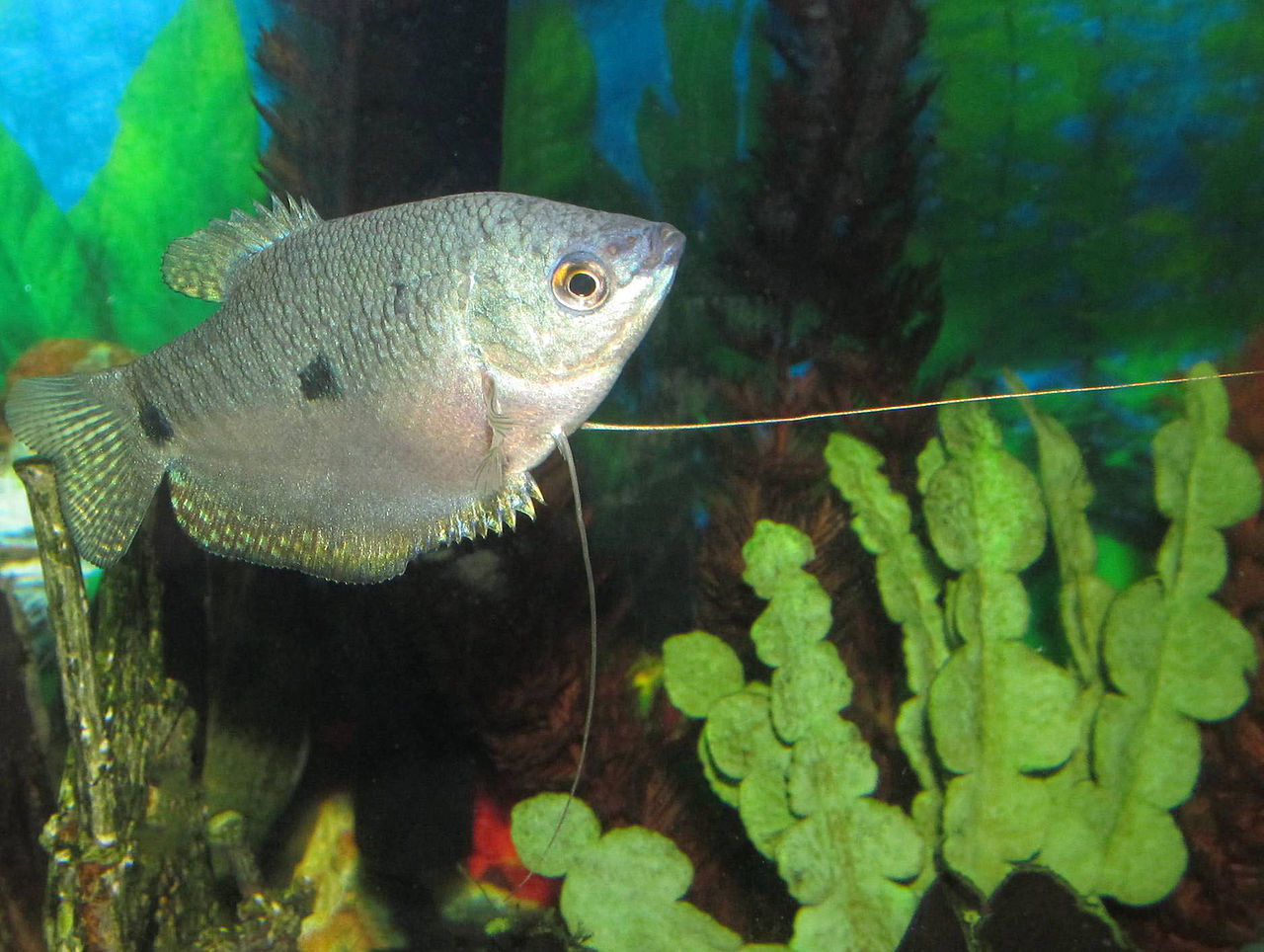
Native to Southeast Asia, from lowland swamps and slow rivers in countries like Thailand, Myanmar, and the Malay Peninsula, three spot gouramis are one of those fish that show up in almost every fish store worldwide. The name comes from the two spots on the body plus the eye, which counts as the third. Most of the popular color forms sold today, including blue, gold, and opaline, are all selectively bred variants of this same species.
Wild-type fish have a silver-blue base with faint marbling and those two distinctive dark spots along the lateral line. They have the classic gourami body shape: laterally compressed, with long trailing pelvic fins that double as sensory feelers. As labyrinth fish, they breathe atmospheric air and will regularly surface, so a tightly fitted lid matters.
Water conditions are flexible. 0 and temperatures from 22 to 28 degrees Celsius, making them genuinely adaptable. Feeding is easy since they'll accept flakes, pellets, frozen bloodworm, brine shrimp, and blanched vegetables without fuss.
Juveniles in the store look peaceful and manageable, but adults can hit 15 centimeters and develop a real territorial streak, especially males. That shift catches a lot of beginners off guard. They're still very much a community fish in the right setup, just not one you can drop into any tank without thinking it through.
Browse actual setups featuring these fish to get a sense of how much space and what tankmate choices work best in practice.
Water Parameters
Temperature
°CpH
GH
dGHKH
dKHSwimming Level
Flow Preference
Keeping multiple Three Spot Gourami together
Three Spot Gourami is strongly territorial. Multiples fight over space unless the tank is large enough for each to claim its own area. A single individual is the safer default.
Compatibility
Good tankmates are fish that occupy the lower water column and don't look like gouramis. Corydoras, loaches, danios, barbs like cherry barbs, and mid-level tetras generally work well. Avoid other gourami species in smaller tanks, and don't mix with bettas since both species react poorly to each other. Long-finned slow fish like fancy guppies or angelfish can become targets. Shrimp and small snails get eaten, so invertebrate communities aren't a good fit. In a well-planted 150-liter or larger tank with careful stocking, a single male three spot can anchor a lively, diverse community without issue.
Commonly kept with
Species this one is most often paired withCommonly tried but avoid
Often paired, but shouldn't beCare Notes
The biggest mistake beginners make is housing two males together or putting one in an undersized tank and wondering why it turns aggressive. A single male needs at least 110 liters, more for a community setup. They need regular surface access since they're labyrinth fish, so keep the tank covered but allow an air gap at the top. Diet variety matters for long-term health since a pure flake diet leads to nutritional gaps over time. Water changes don't need to be extreme but should be consistent. These fish are genuinely tough, but consistency beats heroics every time.
Behavior & Aggression
Aggression in three spot gouramis is strongly tied to age and tank space. Juveniles are usually docile, but males become increasingly territorial as they mature, especially toward other gouramis or similarly shaped fish. Two males in the same tank almost always end up fighting, with the subordinate fish getting harassed relentlessly. Aggression ramps up near the surface and around any chosen territory. Providing plenty of sight breaks with dense planting or decor helps, but in smaller tanks it often isn't enough. Fin nipping toward slow or long-finned tankmates does happen but is more situational than habitual.
Things to Know
- Becomes more territorial and aggressive as it matures, plan tankmates early
- Males will fight conspecifics, keep only one male unless tank is very large
- Can reach 15cm, much larger than juveniles suggest at point of sale
- Will eat shrimp and small snails
Community Sightings
No builds featuring this species yet.
Be the first to feature Three Spot Gourami in your build →Discover Tanks
Explore more builds from the community.


Explore More Species
More species to discover.


