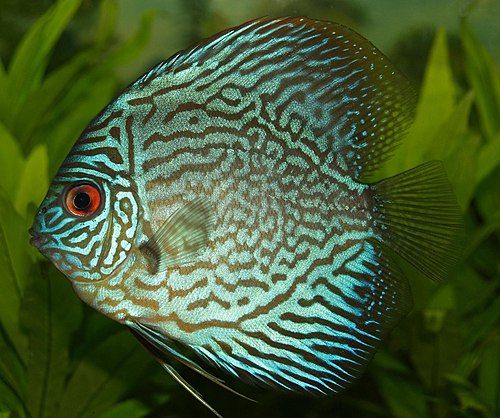
Platinum Medaka
Oryzias latipes var. 'Platinum'
Min Tank Size
30L
Adult Size
3.5 cm
Lifespan
3 years
School Size
6+
About
Platinum Medaka is a selectively bred form of Japanese Ricefish, Oryzias latipes, developed through generations of careful line breeding in Japan where the medaka hobby is practically a cultural institution. What sets this variety apart is its metallic silver-white coloration, the scales catching light in a way that makes a small group look like living fragments of foil drifting near the surface. They max out around 3.5 cm, making them a genuine nano fish, but their sheen and active daytime behavior make them far more visible in a tank than their size suggests.
Native to rice paddies, ponds, and slow streams across Japan and East Asia, wild medaka are used to fluctuating conditions and seasonal temperature swings. The Platinum variety carries that same hardiness. They're comfortable anywhere from around 10°C up to 28°C, which makes them one of very few fish that work in both unheated room-temperature setups and tropical community tanks. pH anywhere from 6.5 to 8.0 suits them fine, and they actually prefer slightly hard, alkaline water rather than soft acidic conditions.
Feeding is easy. They eagerly take quality micro pellets, baby brine shrimp, daphnia, and crushed flake. They're surface-oriented feeders, so sinking foods often go ignored. A planted tank suits them perfectly since it mirrors their natural habitat and provides cover that seems to encourage natural behavior and spawning.
Temperament is genuinely peaceful across the board. They don't nip, don't quarrel, and coexist well with nearly anything that won't eat them. If you want to see how this fish looks in real community setups, browsing user-submitted tank builds featuring Platinum Medaka will give you a much better sense of their visual impact than any single photo can.
Water Parameters
Temperature
°CpH
GH
dGHKH
dKHSwimming Level
Flow Preference
Keeping multiple Platinum Medaka together
Platinum Medaka are shoaling fish and need company of their own kind. Keep a group of at least 6. Smaller groups leave them stressed, washed-out in color, and prone to hiding.
Compatibility
These fish pair well with similarly sized, non-aggressive species that share their preference for gentle flow. Dwarf corydoras, small rasboras like chili or exclamation point rasboras, ember tetras, and pygmy gouramis all work well in the mid-to-upper water column alongside them. They're fully safe with snails and shrimp, including small neocaridina species, making them popular in planted nano setups. Avoid pairing them with nippy fish like tiger barbs or serpae tetras, and obviously any fish large enough to eat a 3.5 cm fish. In coldwater setups they can coexist with white cloud mountain minnows.
Commonly kept with
Species this one is most often paired withCommonly tried but avoid
Often paired, but shouldn't beCare Notes
The most common mistake with Platinum Medaka is underfeeding. Their small mouths need appropriately sized food, standard community flake crushed fine or dedicated micro pellets. They're surface feeders, so anything that sinks fast gets wasted. The other thing beginners miss is that they spawn constantly in warm water and the eggs, which the adults ignore after laying, can be collected and hatched separately if you want to raise fry. A tight-fitting lid is genuinely important since they're capable jumpers, especially at night when disturbed.
Behavior & Aggression
Platinum Medaka are about as non-aggressive as freshwater fish get. Males will occasionally spar briefly with other males during spawning season, usually nothing more than brief chasing near the surface, and it rarely results in any damage. There's no territory to defend, no resource guarding, and they ignore tankmates of other species almost entirely. Keeping a balanced ratio of males to females, roughly one male per two or more females, reduces the minor squabbling that does occur and distributes spawning attention more evenly.
Things to Know
- Prolific egg scatterer, expect frequent spawning in warm months
- Eggs can be removed and hatched separately if raising fry is desired
- Can tolerate near-cold conditions but thrives in warmer subtropical temps
- Will jump from open tanks, a lid or surface cover is strongly recommended
Community Sightings
No builds featuring this species yet.
Be the first to feature Platinum Medaka in your build →Discover Tanks
Explore more builds from the community.


Explore More Species
More species to discover.