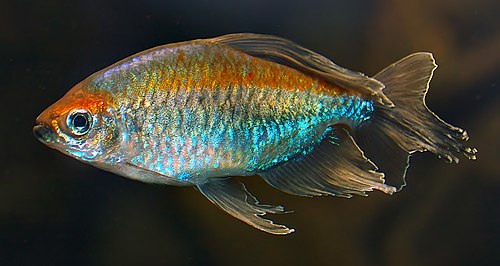
Kenyi Cichlid
Maylandia lombardoi

Min Tank Size
300L
Adult Size
13 cm
Lifespan
8 years
About
Hailing from the rocky shores of Lake Malawi in east Africa, Maylandia lombardoi is one of the most visually striking mbunas you can keep. Juveniles and females are a cool blue with bold vertical black bars, and then something remarkable happens as males mature: they flip entirely to a bright egg-yolk yellow, losing the bars almost completely. It's a reversal of the usual mbuna color pattern, and it makes sexing both easy and endlessly surprising for newcomers.
Lake Malawi is an ancient, alkaline rift lake with extremely stable water chemistry, so replicating that stability is non-negotiable. pH should sit between 7.8 and 8.5, hardness kept high, and temperatures held in the mid-twenties. Filtration needs to be robust because mbunas are messy eaters and high nitrates will stress them quickly. Regular water changes of 25 to 30 percent weekly are standard practice. The tank itself should be stacked with rockwork, creating caves and visual breaks, because territory delineation is the only thing standing between your fish and chaos.
Diet is primarily herbivorous. Spirulina-based flakes and pellets form the backbone, supplemented with blanched vegetables. Avoid high-protein meaty foods over the long term as they contribute to a fatal condition called Malawi bloat. A little variety is fine, but keeping it plant-heavy is the right call.
Aggression is this fish's defining characteristic. Even among mbunas, the Kenyi is considered a handful, regularly harassing and injuring tankmates. It's not a fish you can keep with delicate species, and stocking decisions need to be deliberate. If you want to see how experienced hobbyists handle the chaos, browse real tank builds featuring Kenyi Cichlids on Shimmerscape to get a feel for what actually works.
Water Parameters
Temperature
°CpH
GH
dGHKH
dKHSwimming Level
Flow Preference
Keeping multiple Kenyi Cichlid together
Kenyi Cichlid is strongly territorial. Multiples fight over space unless the tank is large enough for each to claim its own area. A single individual is the safer default.
Compatibility
Kenyi Cichlids need robust, fast-moving tankmates that can hold their own. Other mbunas of similar or larger size are the classic pairing, species like Pseudotropheus demasoni, Labidochromis caeruleus, or Metriaclima estherae can work in a densely stocked, well-structured tank. Avoid anything slow, docile, or similarly colored to the Kenyi male, as those fish will be targeted relentlessly. Peaceful community fish, livebearers, and any invertebrates are completely off the table. Aulonocara peacocks and Haplochromis are risky unless the tank is very large. This is a species built for a dedicated mbuna community, not a mixed setup.
Commonly kept with
Species this one is most often paired withCommonly tried but avoid
Often paired, but shouldn't beCare Notes
The most common beginner mistake is understocking, which sounds counterintuitive but is a real problem. Too few fish means aggression concentrates on individuals, which quickly becomes fatal. You need enough fish and enough rockwork to keep every animal occupied defending its own patch. Malawi bloat from high-protein diets is the other major killer. Stick to spirulina and vegetable-based foods as the foundation. Water quality must be pristine and stable, as these fish do not tolerate pH swings or elevated nitrates well. A too-small tank is almost always a recipe for disaster with this species.
Behavior & Aggression
Kenyi Cichlids are among the most combative mbunas available in the hobby. Males are intensely territorial and will relentlessly pursue and injure rivals or submissive fish that can't escape. Females aren't passive either and will harass each other. The main triggers are conspecific males, similar-looking species, and any fish that enters a claimed rock crevice. The standard mitigation strategy is heavy overcrowding with a very busy rock layout to fragment territories, combined with a single-male setup. Even then, close monitoring is essential.
Things to Know
- Males turn bright yellow at maturity, females stay blue with black bars
- One of the most aggressive mbunas, can kill tankmates
- Keep one male per tank, multiple males will fight to death
- Overcrowding is necessary to dilute aggression, not optional
- Mouthbrooder, remove female if she is holding eggs in a community tank
Community Sightings
No builds featuring this species yet.
Be the first to feature Kenyi Cichlid in your build →Discover Tanks
Explore more builds from the community.


Explore More Species
More species to discover.