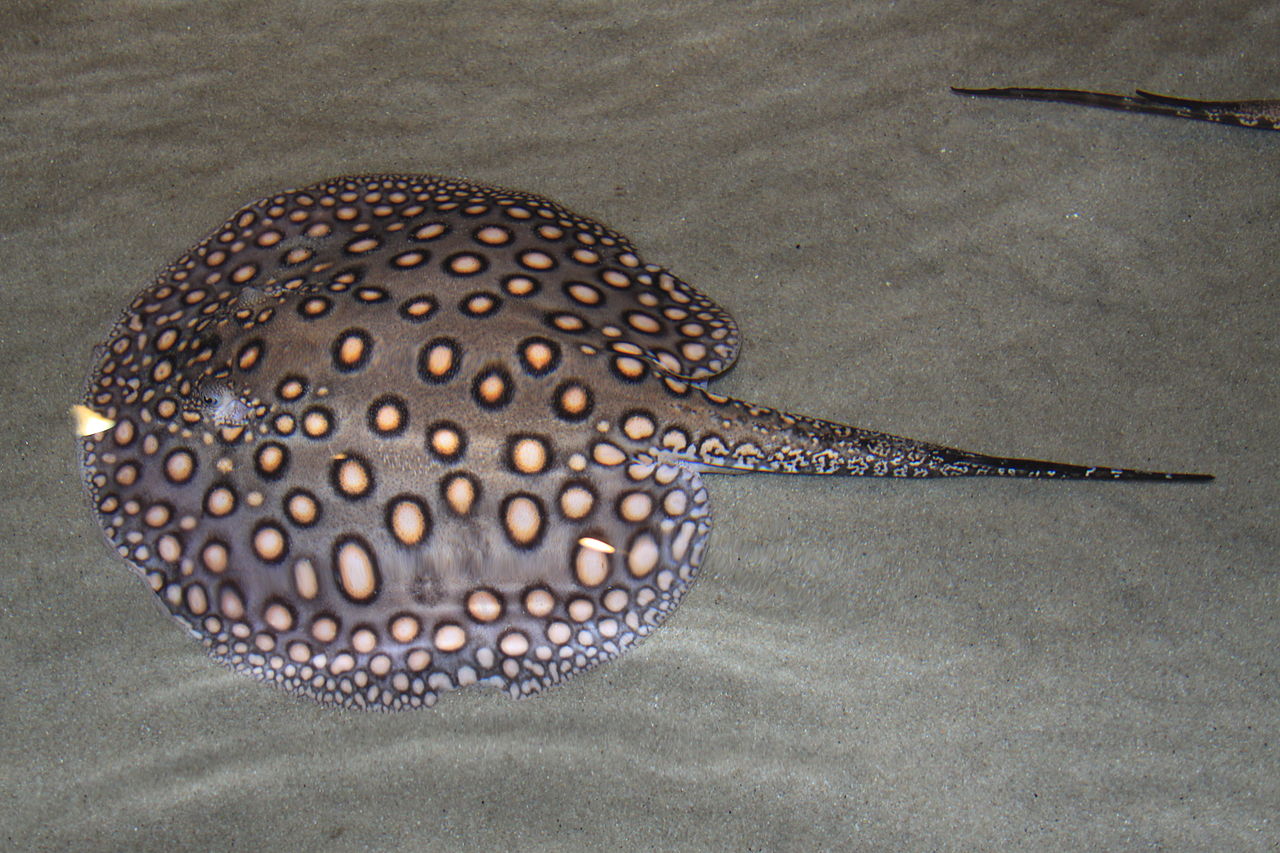
Freshwater Stingray
Potamotrygon sp.
Min Tank Size
700L
Adult Size
60 cm
Lifespan
15 years
About
Freshwater stingrays hail from South American river systems, primarily the Amazon and Orinoco basins, where they cruise soft, sandy riverbeds hunting invertebrates and small fish. In the aquarium hobby several species get lumped under the 'freshwater stingray' umbrella, with Potamotrygon motoro (the ocellate or motoro ray), Potamotrygon leopoldi (the black diamond ray), and various pearl varieties being the most frequently kept. Disc diameters commonly reach 45 to 60 centimeters, and some individuals go considerably larger depending on the species.
2, very low hardness, and temperatures in the mid to upper 20s Celsius. Ammonia and nitrite must stay at zero without exception. These rays are shockingly sensitive to water quality lapses and will go off food or develop skin lesions quickly when conditions slip.
Diet is meaty and varied: earthworms, fresh shrimp, mussel, tilapia fillet, and quality frozen foods are all good staples. They can be trained onto prepared foods with patience.
The personality is surprisingly engaging for a bottom dweller. Many keepers describe their rays as interactive, responding to their presence at feeding time and even allowing gentle contact after trust is established. The tail barb is a genuine medical concern and demands respect during water changes and tank rearrangements.
This is a species that rewards serious commitment with a genuinely unique experience, and browsing real keeper build threads will show you just how impressive a purpose-built ray setup can be.
Water Parameters
Temperature
°CpH
GH
dGHKH
dKHSwimming Level
Flow Preference
Keeping multiple Freshwater Stingray together
Freshwater Stingray is mildly territorial. Small groups can work in spacious tanks with broken sightlines, but expect occasional squabbles.
Compatibility
Stingrays need large, robust tankmates that won't fit in their mouth and won't pick at the ray's disc or tail. Large peaceful cichlids like severums or geophagus work well, as do bigger South American catfish such as large plecos and pimelodids. Avoid anything nippy, as rays can't escape harassment and stress quickly leads to health decline. Small tetras, shrimp, snails, and any invertebrate are simply food. Tankmates also need to tolerate the same soft, acidic water the ray demands, which rules out many species that prefer neutral to hard water.
Commonly kept with
Species this one is most often paired withCommonly tried but avoid
Often paired, but shouldn't beCare Notes
The most common failure is underestimating filtration needs. These animals produce enormous waste and need oversized, highly efficient filtration running on a large footprint tank. Beginners also underestimate how fast water quality crashes in an inadequately filtered setup and lose the ray to ammonia stress within weeks. Sand substrate is non-negotiable, not a suggestion. Gravel abrades the ventral surface and leads to bacterial infections that are difficult to treat. Feeding live or fresh foods consistently, maintaining very stable soft water, and never rushing acclimation are the pillars of keeping these animals long term.
Behavior & Aggression
Freshwater stingrays are not aggressive in the traditional sense, they won't chase or harass tankmates. The predatory classification comes from opportunistic feeding behavior: anything small enough to fit under or in front of the disc is fair game as a food item, not a companion. Conspecific tensions are generally mild, though two large adults in insufficient space can show stress behaviors and competition over preferred resting areas. The real danger is accidental injury to the keeper, not aggression toward fish.
Things to Know
- Venomous tail barb is a serious injury risk during maintenance
- Requires a custom-built or very large footprint tank, not standard dimensions
- Illegal to own without permits in several US states and countries
- Do not house with any fish small enough to be swallowed whole
- Sandy substrate is mandatory, gravel will wound the disc and cause infections
Community Sightings
No builds featuring this species yet.
Be the first to feature Freshwater Stingray in your build →Discover Tanks
Explore more builds from the community.


Explore More Species
More species to discover.