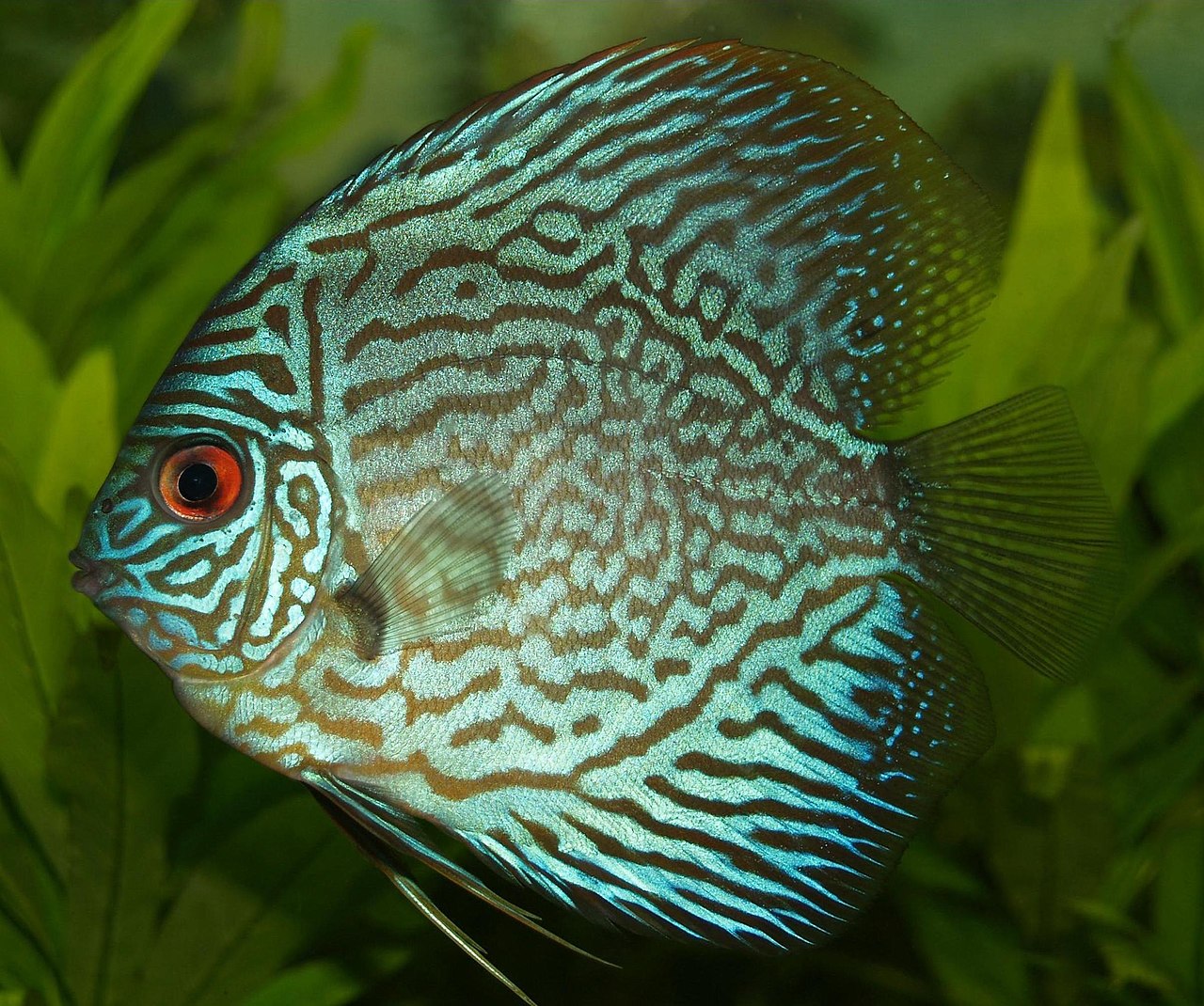
Discus
Symphysodon sp.
Min Tank Size
280L
Adult Size
20.3 cm
Lifespan
10 years
School Size
5+
About
Discus come from the slow, blackwater tributaries of the Amazon basin, where tannin-stained water is warm, extremely soft, and nearly devoid of hardness. They've earned the nickname 'king of the aquarium' for good reason. Few freshwater fish can match that perfectly round, laterally compressed body draped in iridescent blues, reds, and intricate patterning. Modern captive-bred strains like Pigeon Blood, Blue Diamond, Snakeskin, and Turquoise have pushed the color palette even further, though some argue wild types carry a beauty all their own.
Keeping discus well means committing to parameters most fish would never need. Water temperature between 29 and 31 degrees Celsius is essential, not optional. pH should sit between 5.5 and 7.0, with softer water preferred, and nitrates need to stay very low, ideally under 20 ppm. That means frequent, large water changes, sometimes 30 to 50 percent two or three times a week depending on stocking.
They eat well on a varied carnivore diet including quality frozen bloodworms, beefheart mixes, and high-protein pellets, but they can be picky and stressed fish often refuse food entirely.
They're peaceful fish by nature, slow-moving, and visually oriented toward their surroundings. A group of five or more creates a stunning mid-water display, especially against a backdrop of Amazon swords, driftwood, and dark substrate. The commitment is real, but for fishkeepers ready to match that commitment, few tanks are as rewarding to look at.
Water Parameters
Temperature
°CpH
GH
dGHKH
dKHSwimming Level
Flow Preference
Keeping multiple Discus together
Discus are shoaling fish and need company of their own kind. Keep a group of at least 5. Smaller groups leave them stressed, washed-out in color, and prone to hiding.
Compatibility
The biggest limiting factor for tankmates is temperature. At 29 to 31 degrees, most common community fish are stressed or have shortened lifespans. Cardinals are the classic companion because they thrive at these temperatures and come from the same blackwater habitat. Rummy-nose tetras and some smaller Geophagus species can also work. Corydoras sterbai is one of the few cory species that tolerates discus-level heat comfortably. Avoid any fin-nipping species entirely, as discus fins are large, slow-moving targets. Avoid fast, boisterous fish that will compete for food and stress the discus out. Dwarf shrimp are hit or miss as discus may pick at them.
Commonly kept with
Species this one is most often paired withCommonly tried but avoid
Often paired, but shouldn't beCare Notes
The single biggest failure mode is underestimating water change requirements. Discus produce a high bioload and are acutely sensitive to nitrate buildup. Skipping water changes for even a week shows up fast in the form of clamped fins, dark coloration, and refusal to eat. Temperature consistency matters just as much as the temperature itself. Sudden drops of even two or three degrees can trigger disease. New fishkeepers also frequently buy wild-caught specimens without realizing how much harder they are than tank-raised fish. Start with captive-bred if this is your first attempt.
Behavior & Aggression
Discus are generally peaceful, but low-level hierarchy disputes within a group are normal and usually manageable with space and numbers. Aggression escalates during spawning, when a bonded pair may relentlessly chase and bully tankmates or unpaired fish. This can be severe enough to kill stressed individuals through exhaustion and starvation. Keeping groups of five or more spreads aggression rather than concentrating it on one target. Removing a spawning pair to a dedicated breeding tank is often the cleanest solution.
Things to Know
- Extremely sensitive to ammonia and nitrates, weekly large water changes are non-negotiable
- High water temp (29-31C) limits compatible tankmates significantly
- Wild-caught specimens are far harder to keep than captive-bred
- Pairs may bully other discus during spawning, watch for stress
- Beef heart mix and live foods are common staples but carry disease risk
Community Sightings
No builds featuring this species yet.
Be the first to feature Discus in your build →Discover Tanks
Explore more builds from the community.


Explore More Species
More species to discover.